· Abraham · Logbook · 3 min read
The XMP of Memory
How to ensure your thoughts outlive the technology? From analog reels to Markdown.
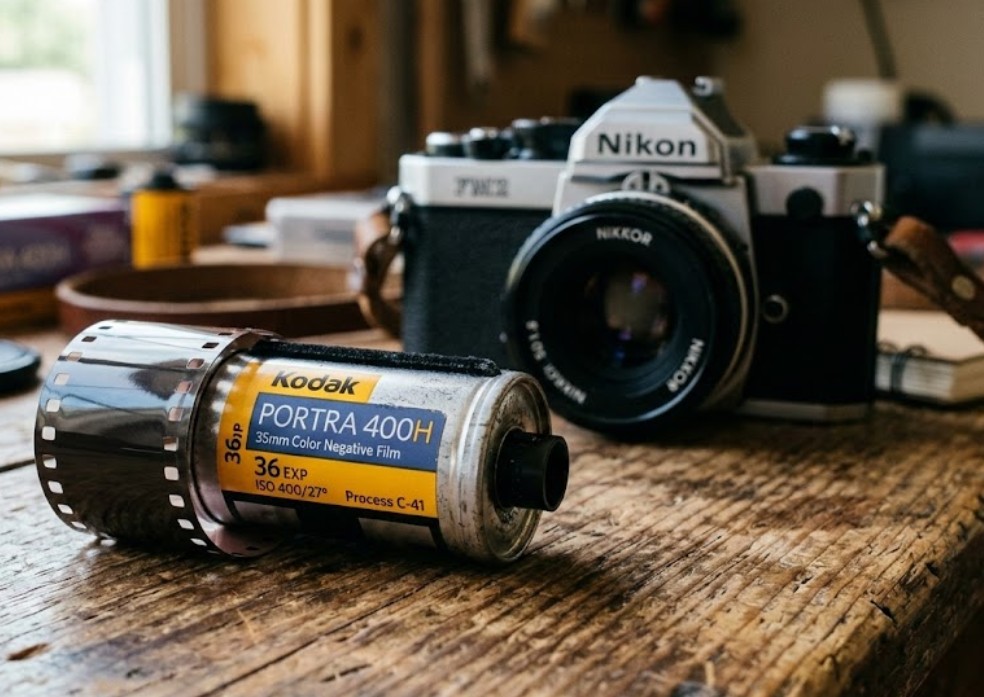
Over 25 years ago, as photography became universal, something shifted irrevocably. We stopped developing a couple of 24-exposure reels a year; the fear of pressing the shutter vanished. We began capturing multiple takes to secure a scene shooting jokes, whims, or experiments. We started accumulating dozens, then hundreds, and finally, thousands of frames.
I realized early on that to prevent my history from dissolving into a digital black hole, I had to architect it. I followed a lean logic that felt self-evident: the YEAR / MONTH / Folder-with-description pattern.
Throughout the years, I watched a parade of applications surface and sink, all promising to “help” me organize my media. Some demolished my folder structures; others hijacked my metadata into proprietary, closed databases instead of honoring the XMP sidecar standard. Though I tested them with genuine curiosity, I clung to my manual, agnostic system. It was the only system that felt truly solid.
Today, I manage 190,000 photos and 15,800 videos in perfect order. My system, forged a quarter-century ago, remains legible to modern AI tools like Immich. They scan the structure, extract metadata from my XMP files, and recognize faces without me moving a single byte out of place. My photos outlasted the tech because, from day one, the data was sovereign.
From the Reel to the Thought
Now that I have begun laboring with Artificial Intelligence to construct Alyss AI (my local agent), the history of my photos echoes with renewed force. If photos and videos are the visual ledger of my life, then my notes, reflections, and learnings constitute the very timber of my thought. But here, the entropy is higher. The threat is not just data Sovereignty, but privacy itself.
I am still in the strata of exploration. I have no interest in entombing my memories in a framework that might vanish in 25 years, nor in some obscure vector format. I require something tactile and maintainable; something that breathes and respects the logics that I will explore in other articles. For me, the foundation is set: plain text and Markdown files.
Today’s AI processes Markdown; any future editor will render it. But first, I must bring coherence to the chaos. This is why I am engineering a logical structure I call SAMA designed to ensure that every note, every memory, and every iteration is not an isolated fragment, but a node with context, intent, and hierarchy.
I want my son to inherit more than just my visual history; I want him to have the blueprint of how I think. To achieve that, I need my own system: one with its own architecture and its own “XMP.”
Author's Note: English is not my mother tongue. While I lean on digital tools for translation, I personally oversee every word to ensure that the human intent and the original soul of my Spanish writing remain intact. This is a journey of ideas, not just algorithms.