· Abraham · SAMA Cortex · 3 min read
I Want to Be a Grandfather
Sama (Sovereign Autobiographical Memory Architecture) is my digital self
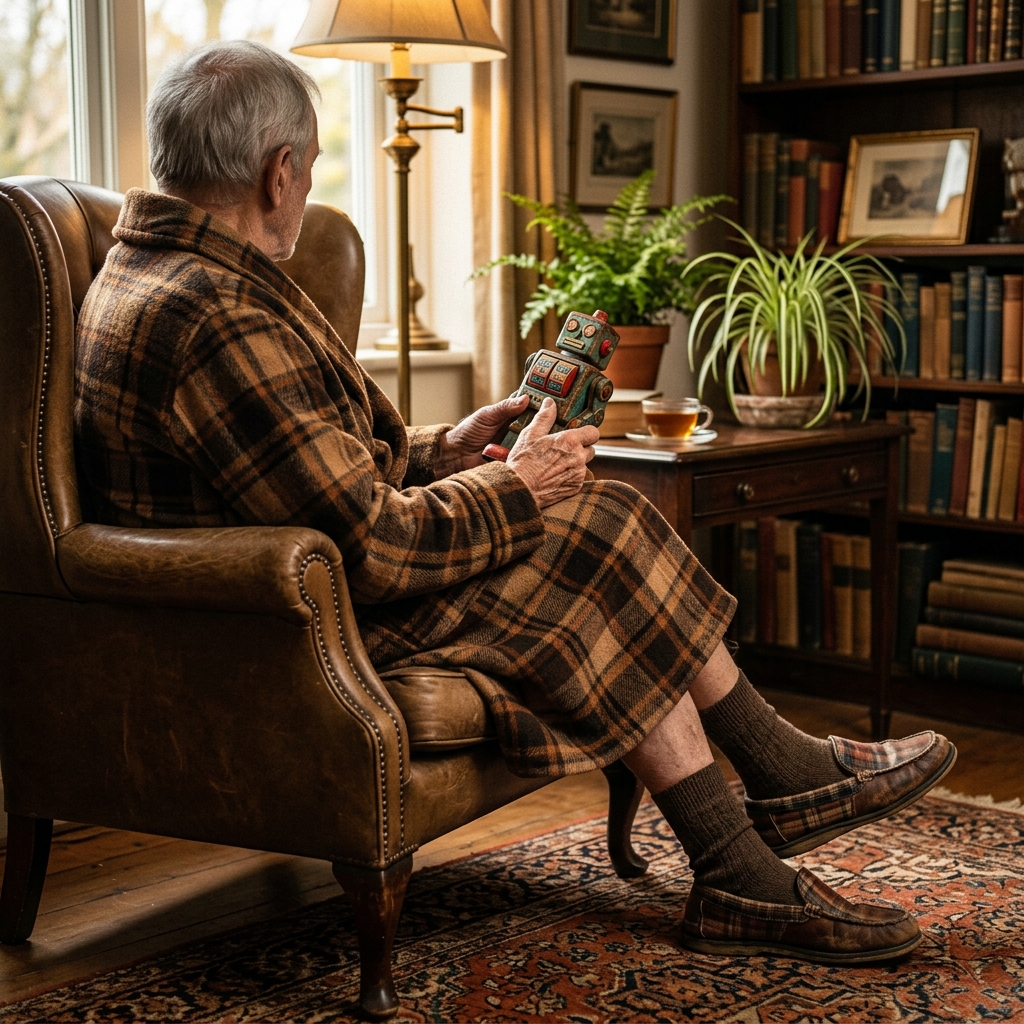
I picture myself a few years from now, sitting in my favourite armchair, wearing those warm slippers, the checked dressing gown, phone in hand. Not calling anyone. Just quietly chatting with Alyss AI, my local AI, telling her things about my life the way you’d talk to an old friend who’s been listening for decades and never forgets a thing. All so that Sama, my digital self, keeps learning who I am.
But let’s go back to the beginning.
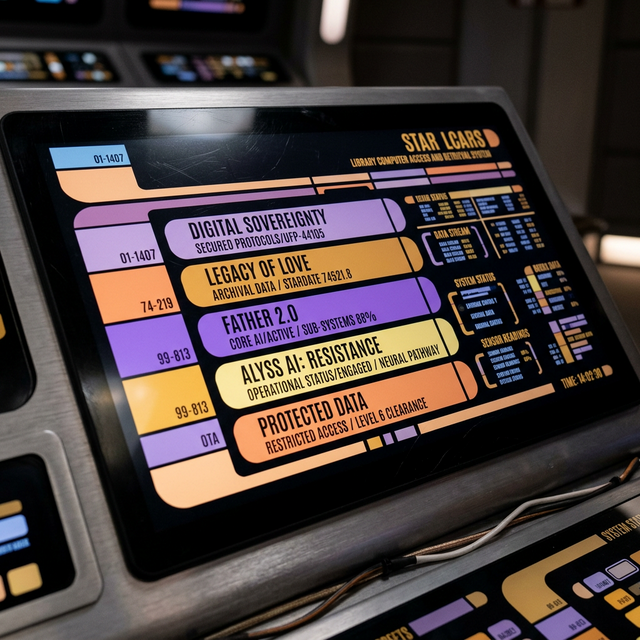
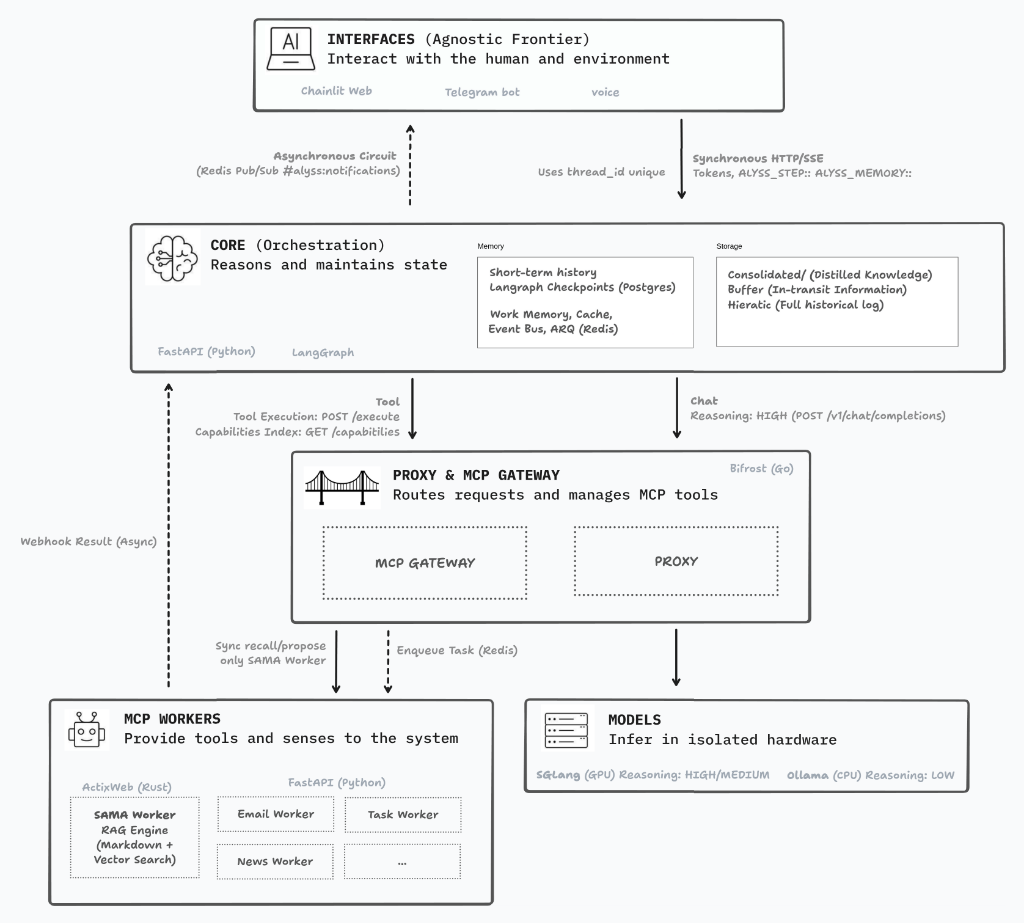
It started reasonably enough. I wanted a personal AI to help with email, the weather, tasks, the shopping list. Something useful day to day. The problem is I’m the kind of person who, once they start pulling on a thread, can’t stop. What began as a home assistant and an excuse to learn ended up becoming a full infrastructure project: writing my own MCP servers, designing services, building interfaces, cloning my voice, putting everything together from scratch.
Yeah, I know what you’re thinking. The industry hands you all of that in four clicks. But for me the journey matters as much as the destination, and I have my reasons.
The first is learning properly, without relying on black boxes I don’t understand. The second is data sovereignty: everything lives in my local environment, nothing goes out to third-party servers. But there’s a third reason, the most important one, the one that genuinely moves me when I think about it: my legacy.
I want to build Sama.
Sama — Sovereign Autobiographical Memory Architecture — is my digital self. A system that stores not just facts about me, but real knowledge: my experiences, my principles, my contradictions, my longings. Something that, twenty years from now, can tell my son not just what I thought, but how I thought, what mattered to me, and what I wanted for him. That speaks in my voice. A living legacy.
I haven’t found anything in the industry that covers this with the depth I’m looking for. There are memory systems for assistants, user profiles, preference databases. But storing a true digital self, with enough depth to be a legacy rather than just a log, that’s still uncharted territory. And it’s exactly where I’m working right now.
The core idea is that your identity isn’t a list of facts. It’s not “I was born here, worked at this company, I like dogs.” That’s a profile, and profiles are flat. Identity has layers, has time, has contradictions, has emotional weight. A data point isn’t worth the same as a lived experience, and a lived experience isn’t the same as a principle you’ve distilled from twenty years of getting things wrong.
Sama represents that difference visually, through geometric shapes whose complexity reflects the depth of the concept they hold, and properties that colour them according to their emotional weight, their place in time, or the degree of conviction with which I hold them. The result isn’t a database. It’s a constellation.
And beneath that constellation, each shape is a Markdown file on my hard drive. No proprietary formats, no dependencies. Plain text that will still exist in twenty years regardless of what technology has come and gone.
To build it, all I need is to make a good coffee, settle into the favourite armchair, and keep narrating my life to Alyss AI.
Like a grandfather.
Author's Note: English is not my mother tongue. While I lean on digital tools for translation, I personally oversee every word to ensure that the human intent and the original soul of my Spanish writing remain intact. This is a journey of ideas, not just algorithms.